
What Is Reverse Logistics? How Ecommerce Brands Recover Value From Returns
Reverse logistics is everything that happens after a customer sends a product back: the return shipment, receiving, inspection, the decision about what to do with the unit, and getting it resold, repaired, recycled, or disposed of. If forward logistics gets a product to the customer, reverse logistics handles the trip back.
For an ecommerce brand, that second trip is rarely small. A return is a second shipping event, a second handling event, and a decision most teams put off. Brands that have a clear process turn many returns back into sellable stock. Brands that do not pay for the delay in storage, markdowns, and write-offs. This guide covers how the process works, what a return really costs, and how to improve it.
Reverse Logistics vs. Forward Logistics
The two flows use the same warehouse, carriers, and systems, but they behave very differently. Forward logistics is predictable: one product, one order, one destination. Reverse logistics is not.
| Forward logistics | Reverse logistics | |
|---|---|---|
| Direction | Warehouse to customer | Customer back to warehouse |
| Volume | Planned from forecasts | Hard to predict, driven by returns |
| Condition | New, sellable stock | Unknown until inspected |
| Key decision | Which warehouse ships it | Restock, refurbish, resell, recycle, or dispose |
| Where money is lost | Shipping and picking errors | Time sitting unprocessed, plus damage and disposal |
The Reverse Logistics Process, Step by Step
Every return follows the same basic path. The brands that run it well do the same six steps in the same order each time.
1. Initiate the return
The customer requests a return, and your order system creates a return authorization with a reason code. The reason code matters more than it looks. It is the data you will use later to cut returns at the source.
2. Ship it back
The customer gets a prepaid label or drop-off instructions, and the package is tracked back to your warehouse or your 3PL. On Amazon Seller Fulfilled Prime, Amazon sets the return policy and shipping rules, and Buy Shipping labels keep tracking data clean.
3. Receive and scan
When the parcel arrives, the warehouse scans it and matches it to the original order and reason. A missing barcode or unmatched return slows everything after it, so intake is where most backlogs begin.
4. Inspect and grade
Someone checks the condition and assigns a grade. A simple scheme works for most brands:
- Grade A: new condition, sellable now.
- Grade B: minor rework needed, sellable after refurbishing.
- Grade C: damaged or incomplete, not sellable as new.
- Scrap: unsafe or unsanitary, must be destroyed.
Take photos of anything graded C or scrap. They support carrier claims and supplier conversations later.
5. Decide the disposition
This is the step that decides whether a return costs you the sale or only the shipping. The main options are:
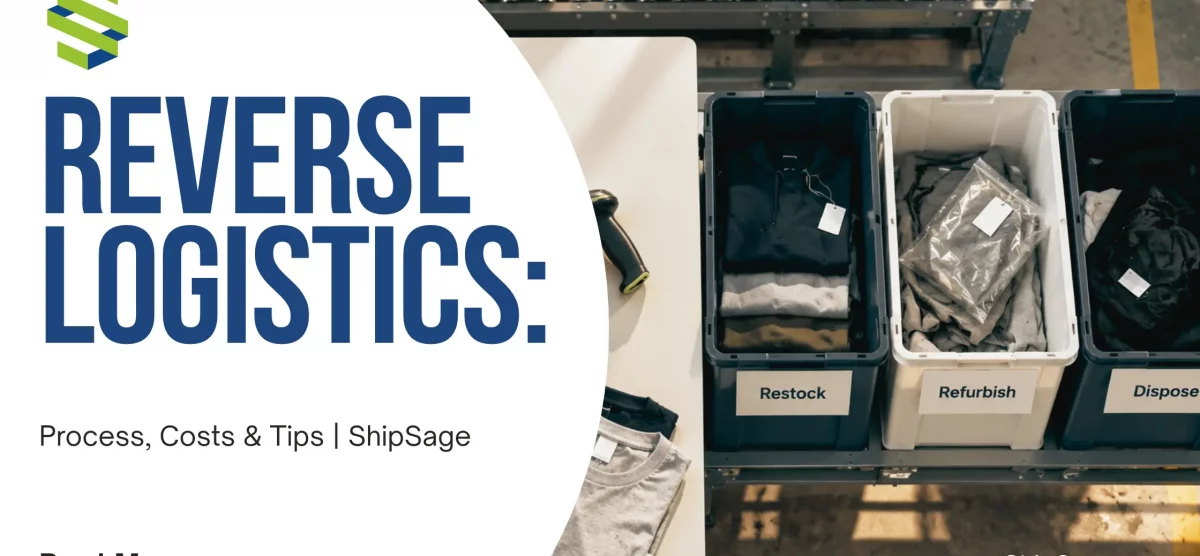
- Restock: return to pickable inventory.
- Refurbish and restock: repack, relabel, replace missing parts or tags.
- Resell elsewhere: open-box, outlet, or liquidation channels.
- Recycle or donate: when resale value is gone but the materials or goods still have use.
- Dispose: with documentation for finance and tax.
6. Close the loop
Update inventory, issue the refund, and log the outcome in your system the same day. A return that is physically done but not recorded still shows as missing stock and still confuses your forecasts.
What Reverse Logistics Really Costs
Most brands track the refund. Few track the whole chain. A useful way to see the true cost of one return is this:
Cost of one return = return shipping + receiving labor + inspection time + repacking materials + storage while waiting + markdown or disposal cost − value recovered from resale
Two terms in that formula are the ones you can control. Time is one: the longer a unit waits for a decision, the more it costs and the more likely it is to become unsellable. Recovery is the other: a unit restocked the same day is worth far more than one that is discounted months later. Hidden charges also matter, which is covered in our post on how hidden costs hurt ecommerce sales. To estimate the shipping side of each return, see how to calculate ecommerce shipping costs.
How to Improve Your Reverse Logistics
Prevent the return at outbound
The cheapest return is the one that never happens. Wrong size, wrong color, and wrong item are among the most avoidable causes, and catching them at the pick station costs far less than processing a return. Accurate picking, sturdier packaging, and product pages that set the right expectations all lower your return volume.
Capture the data that explains returns
Record the reason code, SKU, size or variant, grade, time from receipt to restock, and refund amount. Reviewed weekly, that data shows which styles, suppliers, or packaging choices create repeat returns.
Set a same-day target for restock
Pick a target for how fast a sellable return goes back into live inventory, and track it. Speed is the biggest lever you have on recovery.
Write your disposition rules down
Decide in advance what gets restocked, refurbished, or disposed of by condition. When the rules are written, the warehouse team does not have to wait for a person to decide on each unit.
Reverse Logistics by Product Category
The same process applies everywhere, but the weak points change with the product:
- Apparel has high return rates and size and color variants, so grading and fast refolding matter most.
- Furniture is high ticket and bulky, so evidence capture, missing parts, and recovery decisions drive the cost.
- Beauty and health products need inspection workflows that protect resale value while staying compliant. See beauty and health fulfillment.
- Amazon sellers handle returns inside Amazon’s rules but still inspect, restock, and document everything. See SFP returns.
In-House or 3PL?
Handling returns yourself works while volume is low. It stops working when returns outgrow your space, when you need more than one location to ship fast, or when intake, photos, grades, and refunds are drifting out of sync. At that point a 3PL that receives, inspects, grades, and routes returns in the same system as your outbound orders saves time and keeps inventory accurate. If you are weighing it up, read what a 3PL is and when to outsource fulfillment.
How ShipSage Handles Returns and Reverse Logistics
ShipSage’s returns process follows four steps: the return is initiated in our Order Management System, transported back, inspected, and then either restocked in the warehouse or disposed of. Returned products can be relabeled or repackaged, whether or not the original packaging was damaged, so they can be sold again instead of written off. ShipSage supports returns and relabeling across ecommerce platforms, and returns management is part of the warehouse management system, alongside inventory, order processing, and shipping. For categories like apparel, returned units get SKU-level inspection and a condition-based restock decision against rules you define. See our order fulfillment services and warehouse management system pages for more.
Frequently Asked Questions
What is reverse logistics?
Reverse logistics is the process of moving products from the customer back to the seller and deciding what to do with them: restock, refurbish, resell, recycle, or dispose.
What is the difference between forward and reverse logistics?
Forward logistics moves new products from the warehouse to the customer. Reverse logistics moves returned products back, and the condition of each item is unknown until it is inspected.
What are the main steps in the reverse logistics process?
Initiate the return, ship it back, receive and scan, inspect and grade, decide the disposition, and close the loop in your system.
Why does reverse logistics cost so much?
A return adds a second shipment, extra labor, inspection time, storage, and often a markdown or disposal cost. The longer a unit waits for a decision, the more it costs. See our guide to hidden costs for more.
Should I handle returns in-house or use a 3PL?
In-house works at low volume. A 3PL makes sense when returns outgrow your space, you ship from more than one location, or returns data is out of sync with inventory. Our FAQ page also covers how ShipSage handles returns.
The Bottom Line
Reverse logistics is not a cost center you can ignore. It is the process that decides whether a return costs you only the shipping or the whole sale. Grade quickly, decide quickly, record everything the same day, and use the data to prevent the next return. A clear process and the right partner turn returns from a drain on margin into recovered inventory.
Ready to Upgrade Your Fulfillment?
At ShipSage, we work with growing ecommerce brands to provide flexible, scalable 3PL fulfillment — no long-term contracts, real people, and a nationwide warehouse network built for speed. Whether you’re shipping 500 orders a month or 50,000, we’re ready to help you deliver like a giant.
Fill out the form below to start a conversation with our team. →